Barndominium Builders in Whitman County, Washington
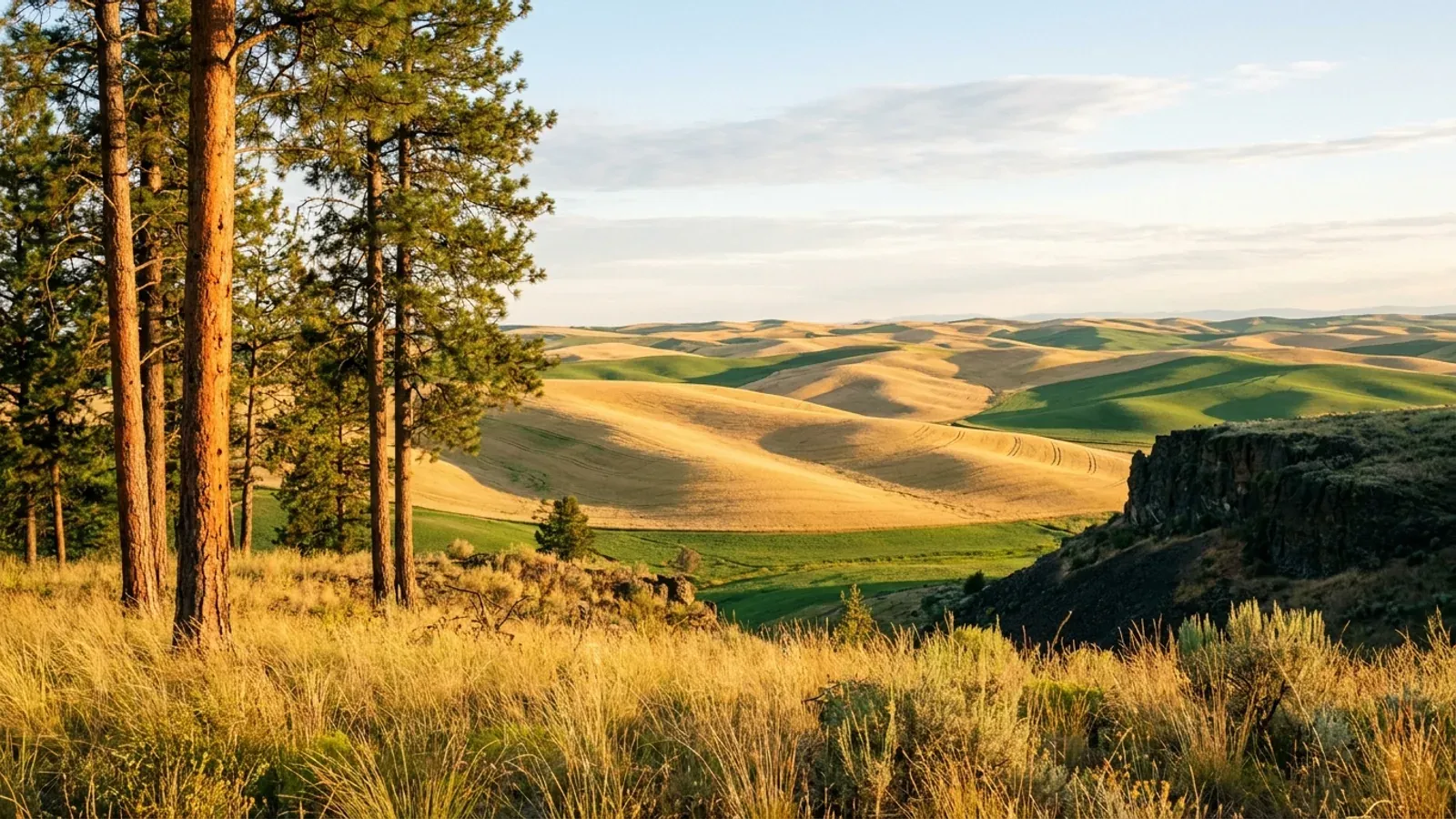
Whitman County is Palouse wheat country, rolling hills farmed edge to edge between Colfax, Pullman and the eastern state line, and that farmland shapes where a new house can go. In the County's Agricultural zone a home site first needs a Rural Housing Certificate, a planning review that checks views from neighboring homes, distance from working fields and the hilltop profile before any building permit is possible. Once the site is certified, the County's Building and Development Division issues the permit, and Whitman County Public Health must approve the septic system and a tested well first. For a farm family or a buyer adding a home to working ground, a barndominium fits the setting: one tall building for equipment, hay or a shop, with living space at one end. Barndominium kits are a common route for owners with their own crew and a slow winter, and pole barn homes suit the long spans a combine needs. If the land is inside Pullman, Colfax or another town, that city's rules apply instead. Send us the parcel and we will check its zoning and the certificate criteria before any plans are drawn, or we can take the whole job through our turnkey builds.
Whitman County at a glance
- County
- Whitman County
- Building permit
- County building department
- Land use
- County rural and resource zoning
- Wastewater
- Septic permit from the health jurisdiction
- Water
- Private well
Barndominium Builders Near Whitman County
From a turnkey build to a shell you finish yourself, the work starts with the parcel: the access, the building pad, the route to sewer or septic, and the water source. The parcel decides the budget more than the floor area does, so each option is priced against your land rather than a rate card.
Turnkey Builds
Turnkey barndominiums in Washington State: one team from land and permits to the finished, inspected house, with water, septic and energy code planned in.
Custom Plans
Custom barndominium plans for Washington State: floor plans and permit drawings with the energy code credits and your site's design values built in.
Site Preparation
Barndominium site preparation in Washington State: clearing, grading, drainage and pads, planned around the well, septic area, wetlands and the climate.
Permitting
Barndominium permits in Washington State: city or county building permit, water supply evidence, septic permit, energy code credits and rural zoning.
Barndominium Kits and Pole Barn Homes in Whitman County
A kit suits an owner who wants to raise the shell with their own crew. A pole barn home sets its frame on posts and trusses (the engineering term is post-frame construction) and suits a wide, simple layout with a shop bay under the same roof; a metal building home uses a bolted steel frame. Which one fits your parcel comes down to the zoning, the site and the design values the local building office publishes, covered below.
Barndominium Kits
Barndominium kits and shell kits for Washington State land: frame, panels and drawings, sized to the design values your city or county sets for the site.
Pole Barn Homes
Pole barn homes and pole barn house kits for Washington State: post-frame buildings with a shop and living space, designed to your county's snow load.
Metal Homes
Metal building homes in Washington State: steel-clad houses finished to the state energy code, with the insulation and condensation details done right.
Building a Barndominium in Whitman County: Permits, Zoning, Septic and Water
On rural land the zoning, septic and water answers often come before the building answer. Here is who decides each part in Whitman County, taken from the office or document that publishes it. Rules change, so check them again against your parcel before anything is drawn.
Whitman County Building and Development Division
The Building and Development Division, part of Whitman County Public Works in Colfax, issues building permits in the unincorporated parts of the county, including structural, plumbing and mechanical permits, and carries out plan review and inspections. Cities and towns inside the county handle their own permits.
Source: Building and Development Division, Whitman County (whitmancounty.gov)
Whitman County Planning Division
Within the County's Agricultural Zoning District, a new rural residence must meet the zoning ordinance, and the Planning Division issues a Rural Housing Certificate when a site qualifies. That certificate is needed to secure building permits or to create a residential lot by short plat. Neighbors within 1,500 feet are notified of an intended approval and may appeal within twenty days.
Source: Instructions for Completing the Application for a Rural Housing Certificate, Whitman County (whitmancounty.gov)
Whitman County Public Health
Whitman County Public Health runs the septic process: a site evaluation by its environmental health specialist, an approved design, then a construction permit. The department states plainly that building permits cannot be issued until that septic construction permit is issued, and the system gets a final inspection before it is covered.
Source: Onsite Septic, Whitman County Public Health (whitmancountypublichealth.org)
Whitman County Public Health (land development review)
Water availability is proved before the permit. Whitman County Public Health signs off on building permits and Rural Housing Certificates through a land development review. Once a well or other drinking water source is established, it must be tested for nitrate and total coliform, and results showing the water is safe must reach the department before permits are issued.
Source: Land Development, Whitman County Public Health (whitmancountypublichealth.org)
- Where a farm-zone house may sit
- Under the County's Rural Housing Certificate criteria, a viewshed homesite must sit at least 1,500 feet from the nearest residence or be hidden from it by terrain; a house may not be built within 200 feet of land in commercial farm production (100 feet with the farmer's written consent); and living space may not rise above the top of its landform.
- Private roads and winter plowing
- Whitman County's guide for new rural residents says the County maintains just under 2,000 miles of public roads, but many rural properties are reached by private roads the owners maintain, and gravel county roads are not plowed unless at least six inches of snow have accumulated or drifting occurs.
Source: Instructions for Completing the Application for a Rural Housing Certificate, Whitman County (whitmancounty.gov)
Source: Pondering the Palouse, Whitman County (whitmancounty.gov)
Building on land near Whitman County
On the Palouse the zoning question comes before the price. If the parcel is in the Agricultural zone, check whether it already has a certified residential site; if it does not, the Rural Housing Certificate criteria decide where, and whether, a house can go, and after approval there are 270 days to finish the well and file a short plat. Stake the four corners of the proposed footprint, because the County measures from them. Plan for a private well and a septic system, as community sewer is generally not available on rural land, and let the soil evaluation set the drainfield. Check the access road, too. A barndominium set into the side of a hill, below the ridgeline, usually satisfies the landform rule and keeps the wind off.
Other places in this part of Washington
Spokane & the Inland Northwest
- Spokane
- Spokane Valley
- Spokane County
- Stevens County
- Whitman County
Have land in or near Whitman County? Tell us about the parcel and what you want on it, and we will check it against the local rules before anything is drawn.
Building in Whitman County: questions
Start the surveyHow much does it cost to build a barndominium in Whitman County?
Do I need a building permit for a barndominium in Whitman County?
Can I build a house on farmland in Whitman County?
Keep reading
What usually comes next once you know what Whitman County allows.
Barndominium Cost Guide
Sourced per-square-foot ranges by tier and size, and what moves the number on your land.
Read itIs a Barndominium Legal in Washington?
Zoning, rural land, septic, water and who inspects, before you buy the land.
Read itHow Long Does It Take?
From parcel to move-in, and which steps set the clock.
Read itSources for this page
The published pages behind the Whitman County facts above. Rules change, so check the current version with the office before you rely on it.
- Building and Development Division, Whitman CountyBuilding permit authoritywhitmancounty.gov
- Instructions for Completing the Application for a Rural Housing Certificate, Whitman CountyLand use and zoning; Where a farm-zone house may sitwhitmancounty.gov
- Onsite Septic, Whitman County Public HealthSewer or septicwhitmancountypublichealth.org
- Land Development, Whitman County Public HealthWater supplywhitmancountypublichealth.org
- Pondering the Palouse, Whitman CountyPrivate roads and winter plowingwhitmancounty.gov
Other places near Whitman County
Nearby places with their own pages. Across a city limit or a county line the permit office, the zoning, the septic program and the water rules can change, so each is covered separately.
Building in Whitman County?
Start with the survey. Tell us where the land is and what you want on it, and we will come back with which offices decide it, what the zoning allows, and a plan to fit.