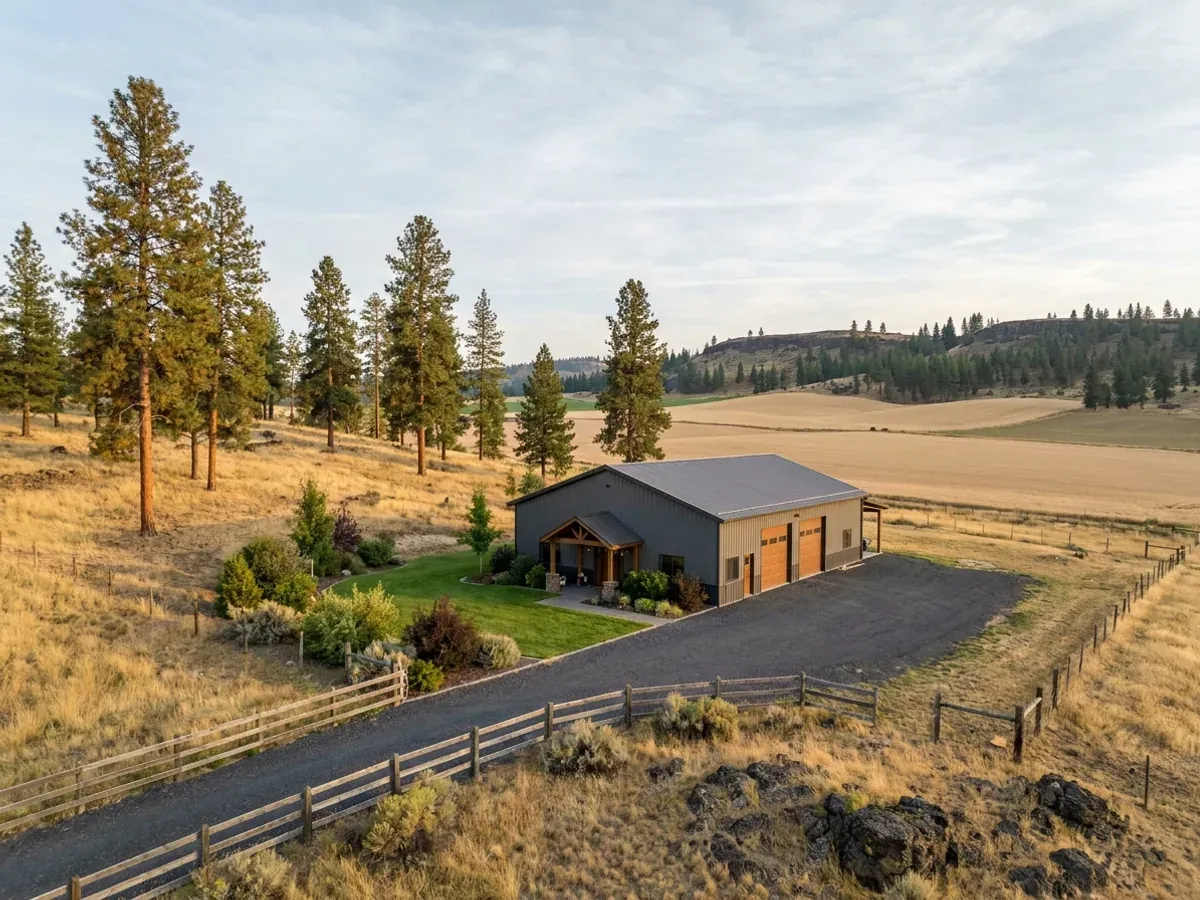
Turnkey Barndominiums in Washington State
A turnkey barndominium is built from bare land to a finished, inspected house under one agreement, so you deal with one team instead of coordinating a kit supplier, an erection crew and a dozen trades yourself. In Washington State that team also carries the parts of the job that stall rural builds: showing an adequate water supply for the building permit, working around the septic permit from the local health jurisdiction, and designing the house to the state energy code's efficiency credits.
One Sequence From Land to Final Inspection
A turnkey build in Washington follows an order that matters more than it looks. The land comes first: the county's zoning, and any wetlands, streams, steep slopes or shoreline on the parcel, decide where the house can go. Water comes next, because a building permit for a house requires evidence of an adequate water supply, whether that is a letter from a water system, a water right or, in most areas, a water well report. In Streamflow Restoration watersheds, a new home on a new permit-exempt well also pays a fee and has a lower withdrawal cap recorded on the title. Then septic: off sewer, the system needs a permit from the local health officer before construction, based on a soil and site evaluation and a design that reserves room for a replacement drainfield.
Only then does the house get drawn to its final form, with the energy code credits on the drawings and the structural notes written to your jurisdiction's design values. The permit goes to the city or county that issues residential building permits for your parcel. After that, it is a construction schedule: site work, foundation, frame, dry-in, the trades, insulation, finishes and the final inspection.
We build the barndominium through all of it. The well is drilled by a licensed well driller you hire directly, the septic system is designed by a septic designer and permitted by the local health jurisdiction, and plumbing, electrical and HVAC are done by licensed trade contractors. We plan the house around each of them and keep the schedule in order.
Sales Tax on a Turnkey Build in Washington
One cost surprises buyers from out of state. When a contractor builds a house on land you own, Washington retail sales tax applies to the full contract price: the Department of Revenue's guidance for custom construction says the contractor collects it from the landowner on the gross contract price. On a turnkey build that tax applies to the whole contract, not just the materials, so it belongs in the budget from the start. Our cost guide shows where it sits alongside the other costs.
Turnkey Builds: how the work runs
Four stages, in this order. The sequence matters more than it looks: on rural Washington land, settling the water supply, the septic permit and the building permit before anything is fabricated is what keeps a build from stalling.
Land, water and septic
We start with the parcel: zoning, wetlands and slopes, access, the water supply and where the septic system can go. The water evidence and the septic permit are the two approvals most likely to hold up a rural build, so they are settled first.
Design and permit
We draw the house, fit the frame to it, put the energy code credits and your jurisdiction's design values on the drawings, and submit the permit set to your city or county building department.
Build
Site work, foundation, frame and dry-in, then insulation, interior framing, the trades and finishes. The building department inspects at the stages it calls for.
Final and handover
Final inspection, a walk-through with you, and the house handed over with its documents, including the permitted septic system details you will need for its upkeep.
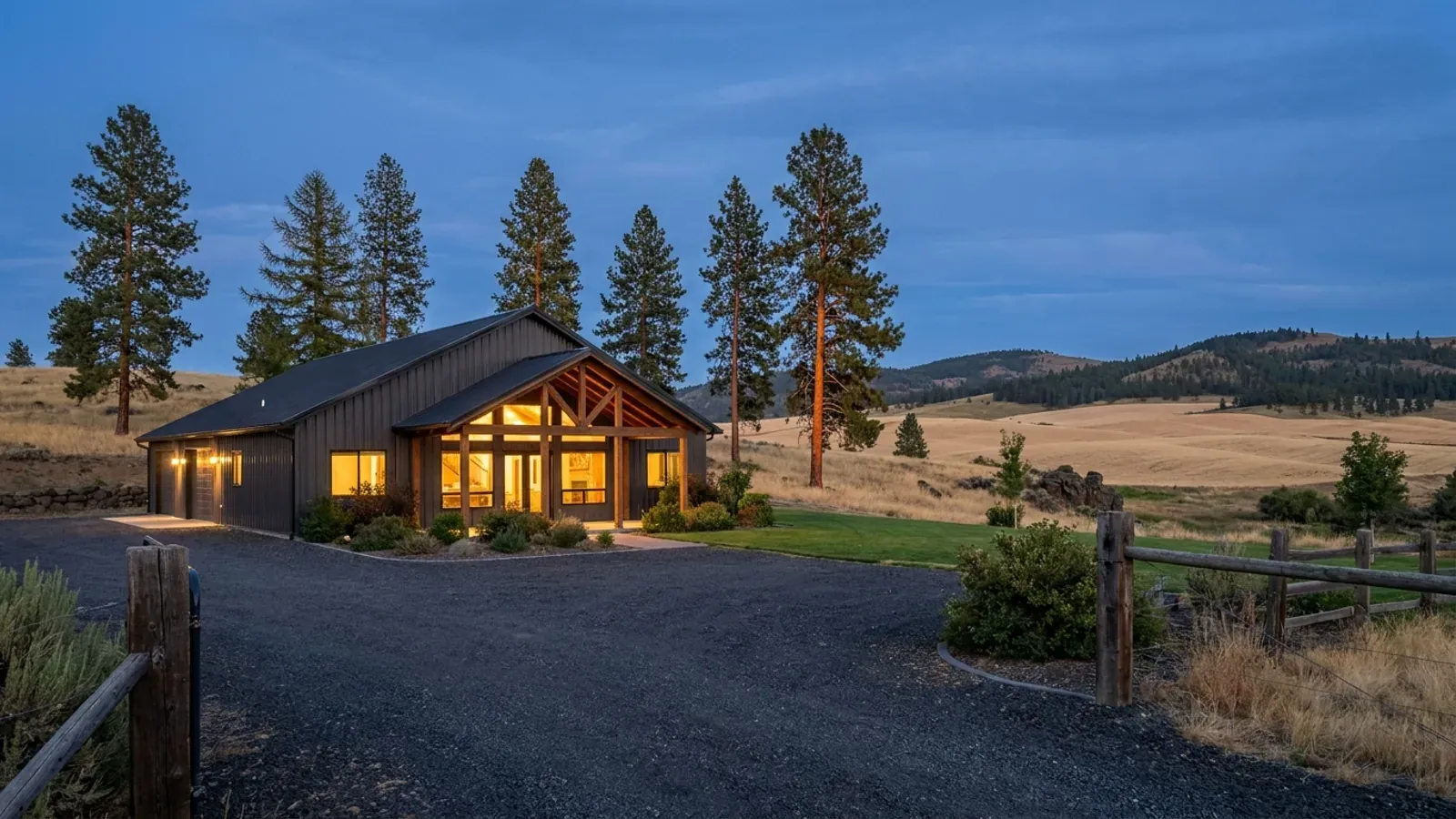
The approvals are where rural builds stall
On rural Washington land, a house needs evidence of an adequate water supply for its building permit and a septic permit from the local health jurisdiction, and wetlands, streams or slopes can move where it sits. Those three are where most schedules slip. A turnkey build puts them first, before the frame is ordered.
Where we deliver turnkey builds
In Washington the first line that matters is usually a city limit. Cities and counties enforce the state building code and issue residential building permits: usually the city building department inside city limits and the county in unincorporated land, where most barndominiums are built and where the county's comprehensive plan sets rural densities. The state building code is the same on both sides of every line. What changes is the zoning, the snow, wind, frost and seismic values the jurisdiction sets, the local health jurisdiction that permits the septic system, and how the house shows an adequate water supply.
Barndominium builders across Washington State.
Every city and county has its own answer on permits, septic and water. The service area pages set out what each one publishes.
What actually decides the price
Square footage is the number everyone leads with, and it is rarely the one that moves a barndominium budget. These four do.
-
Water supply
Connecting to a nearby water system is usually simpler than drilling a well, but not always available. A well's depth and yield, and any fee or limit that applies in your basin, vary widely.
-
Septic system type
The soils decide the system. A conventional gravity drainfield costs less than a pressure or treatment system that difficult soils may need. The local health jurisdiction decides what is approved.
-
Sales tax on the contract
Washington retail sales tax applies to the full price of building a house on your land, so the tax scales with the whole build.
-
Finish level
Interior finishes, cabinets, flooring and fixtures are the most flexible part of the budget. The shell and the systems are fixed by the design; the finish is where you choose.
Turnkey Builds in Washington: common questions
8 questions we get asked most often about building in Washington. If yours is not on the list, ask it directly.
What does turnkey mean for a barndominium?
Does a turnkey build include the well and septic?
Do I pay sales tax on a new barndominium in Washington?
Why do I need to show a water supply before I get a building permit?
How long does a turnkey barndominium take in Washington?
Can I do some of the work myself on a turnkey build?
What if my land has wetlands, a stream or steep slopes?
Can you build a turnkey barndominium inside a city?
Sources
- RCW 19.27.097, Building permit application: evidence of adequate water supply — Washington State Legislature
- RCW 90.94.030, Streamflow restoration: permit-exempt domestic withdrawals (WRIAs 7 to 10 and 12 to 15) — Washington State Legislature
- WAC 246-272A-0200, On-site sewage system permits — Washington State Legislature
- Hiring a Septic System Professional — Washington State Department of Health
- RCW 19.27.050, Enforcement by counties and cities — Washington State Legislature
- WAC 51-11R-40620, Energy code additional energy efficiency requirements (R406.3) — Washington State Legislature
- Custom construction — Washington State Department of Revenue
- Wells: well construction and licensing — Washington State Department of Ecology
Keep reading
The pages that answer the next question this one raises.
Ready to put turnkey builds against a real plan? Start there and the rest follows.
Tell us about the land
Tell us where the parcel is and what you want on it, and we will come back with who has jurisdiction, what the land needs before it can be built on, and a realistic budget range. Starting the survey costs nothing.