Barndominium Builders in King County, Washington
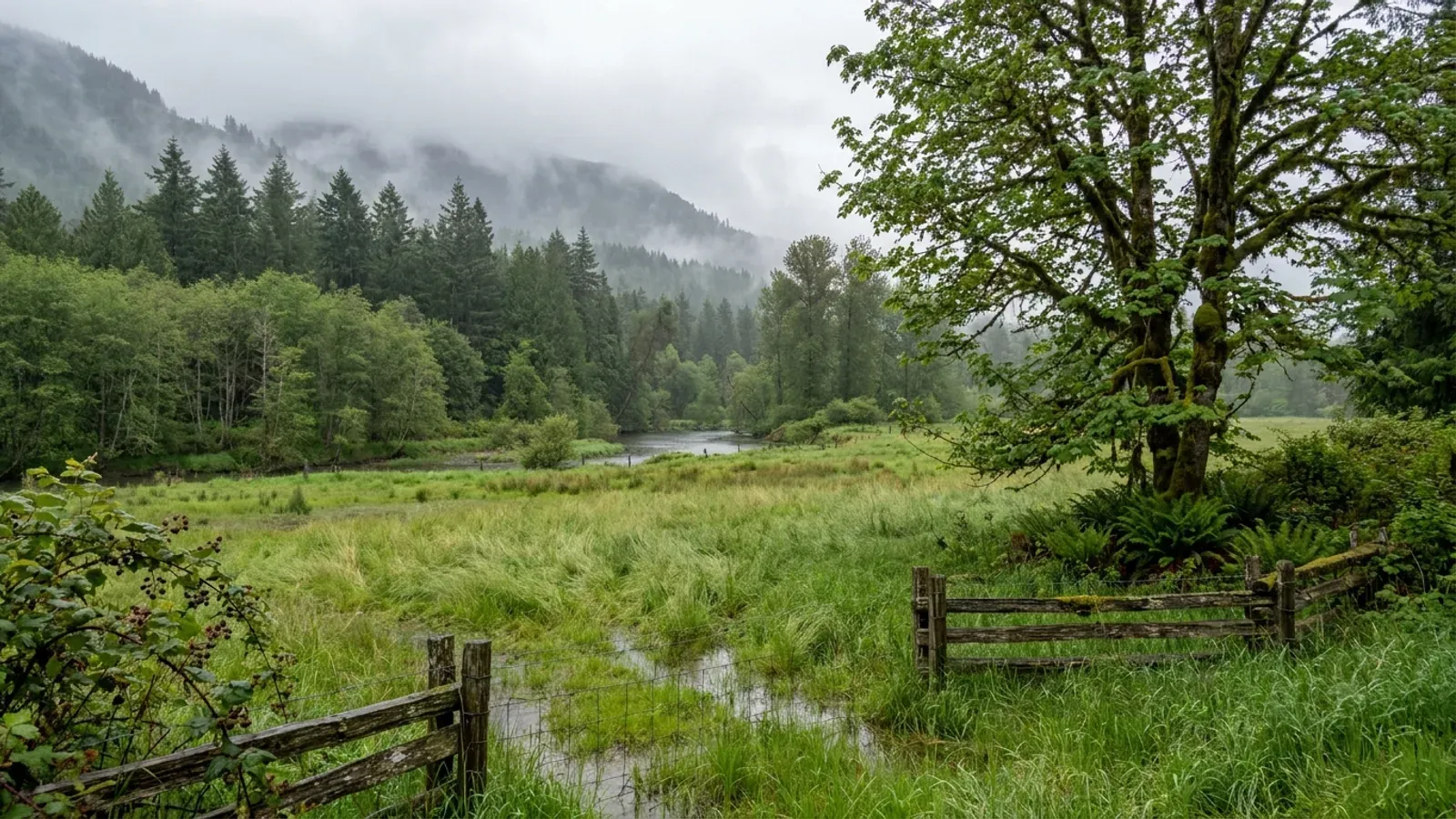
Unincorporated King County is where the acreage around Seattle actually is: the Snoqualmie Valley, the Enumclaw Plateau, Vashon Island and the forested foothills, zoned for rural homes, farms and forestry rather than subdivisions. That is the natural setting for a barndominium with a working shop, a pole barn home with room for horses, or a house and barn under one roof. The county's Permitting Division issues the building permit for land outside the cities, and much of the rural area runs on a private well and a septic system, so the water source and the drainfield are settled before the house is. Barndominium kits and fully custom builds both go through this process. The Eastside cities, Bellevue and Kirkland among them, and every other incorporated city issue their own permits under their own zoning, which is mostly suburban lots; this page is about the rural county beyond them. For city lots, see Seattle, Renton or Auburn. Send us the parcel through the survey and we will check the zone, the water and the septic path before you buy.
King County at a glance
- County
- King County
- Building permit
- County building department
- Land use
- County rural and resource zoning
- Wastewater
- Septic permit from the health jurisdiction
- Water
- Public water or a well
Barndominium Builders Near King County
From a turnkey build to a shell you finish yourself, the work starts with the parcel: the access, the building pad, the route to sewer or septic, and the water source. The parcel decides the budget more than the floor area does, so each option is priced against your land rather than a rate card.
Turnkey Builds
Turnkey barndominiums in Washington State: one team from land and permits to the finished, inspected house, with water, septic and energy code planned in.
Custom Plans
Custom barndominium plans for Washington State: floor plans and permit drawings with the energy code credits and your site's design values built in.
Site Preparation
Barndominium site preparation in Washington State: clearing, grading, drainage and pads, planned around the well, septic area, wetlands and the climate.
Permitting
Barndominium permits in Washington State: city or county building permit, water supply evidence, septic permit, energy code credits and rural zoning.
Barndominium Kits and Pole Barn Homes in King County
A kit suits an owner who wants to raise the shell with their own crew. A pole barn home sets its frame on posts and trusses (the engineering term is post-frame construction) and suits a wide, simple layout with a shop bay under the same roof; a metal building home uses a bolted steel frame. Which one fits your parcel comes down to the zoning, the site and the design values the local building office publishes, covered below.
Barndominium Kits
Barndominium kits and shell kits for Washington State land: frame, panels and drawings, sized to the design values your city or county sets for the site.
Pole Barn Homes
Pole barn homes and pole barn house kits for Washington State: post-frame buildings with a shop and living space, designed to your county's snow load.
Metal Homes
Metal building homes in Washington State: steel-clad houses finished to the state energy code, with the insulation and condensation details done right.
Building a Barndominium in King County: Permits, Zoning, Septic and Water
On rural land the zoning, septic and water answers often come before the building answer. Here is who decides each part in King County, taken from the office or document that publishes it. Rules change, so check them again against your parcel before anything is drawn.
King County Department of Local Services, Permitting Division
For land in unincorporated King County, the Permitting Division issues single-family building permits, applied for through MyBuildingPermit.com. The county tells applicants to check the jurisdiction and zoning first to be sure a parcel is unincorporated, since each city and town permits separately inside its own limits. It also flags critical areas, flood zones, shorelines, steep slopes and wetlands to research early.
Source: Single Family Residential Permit Process, King County (kingcounty.gov)
King County (Title 21A Zoning)
In the rural area its comprehensive plan designates, King County's Rural Area zones run RA-2.5, RA-5, RA-10 and RA-20: RA-5 is one home per five acres, RA-10 applies near resource lands or where critical areas are significant, and RA-20 covers Rural Forest Focus Areas. The zone allows small-scale farming and forestry.
Source: Title 21A Zoning, King County Code (aqua.kingcounty.gov)
Public Health – Seattle & King County, On-site Sewage Program
A new septic system needs a site application and an installation permit from Public Health – Seattle & King County; a designer submits the site application, a certified installer builds the approved design, and work cannot start until the permit is posted on site. The county notes longer review times after a permitting system change.
Source: New Design and Installation, On-site Sewage Program, Public Health – Seattle & King County (kingcounty.gov)
Public Health – Seattle & King County, Drinking Water Program
Homes and septic systems in King County cannot be built without water from an approved source. Applicants for building permits must show they can use one, approved either by Public Health – Seattle & King County or by the state Office of Drinking Water. Rural parcels use a water district or a private well; for a new well, the parcel's WRIA decides whether streamflow restoration limits apply.
Source: Drinking Water Permitting Process, Public Health – Seattle & King County (kingcounty.gov)
- New exempt wells by watershed
- A King County Permitting Division handout says a building permit relying on a new permit-exempt well in WRIA 7, 8, 9, 10 or 15 carries a $500 payment, a copy of the well report and recorded limits of 950 gallons per day annual average for domestic use. Those limits are recorded against the property.
- Protected farmland
- King County's Farmland Preservation Program has protected about 16,400 acres, mostly in agricultural production districts, by buying development rights. Deed-protected farms lie in the Green, Sammamish and Snoqualmie River Valleys, on the Enumclaw Plateau and on Vashon Island, so check a farm parcel's title for an easement before planning a new home.
Source: Permit Exempt Wells and the Hirst Decision, King County Permitting Division (cdn.kingcounty.gov)
Source: Farmland Preservation Program, King County (kingcounty.gov)
Building on land near King County
Rural King County land comes in RA zones, and the number after RA is the density: RA-5 allows one home per five acres, RA-10 one per ten. Confirm the parcel is unincorporated and not inside a city before anything else. Most rural lots need a septic site application, so budget time for soil evaluation and Public Health review, and settle the water source early: a water district letter, or a new well with the recorded daily limit that applies in the county's streamflow watersheds. Floodplains on the Snoqualmie and Green valley floors, steep slopes in the foothills and farmland easements on the plateau all shape where a house and barn can go. Our site preparation work covers clearing, grading and access once the plan is set.
Other places in this part of Washington
Seattle & King County
- Seattle
- Renton
- Kent
- Auburn
- Federal Way
- King County
Have land in or near King County? Tell us about the parcel and what you want on it, and we will check it against the local rules before anything is drawn.
Building in King County: questions
Start the surveyHow much does it cost to build a barndominium in King County?
Do I need a building permit for a barndominium in King County?
Can I drill a well for a barndominium in rural King County?
What does RA-5 zoning allow for a barndominium?
Keep reading
What usually comes next once you know what King County allows.
Barndominium Cost Guide
Sourced per-square-foot ranges by tier and size, and what moves the number on your land.
Read itIs a Barndominium Legal in Washington?
Zoning, rural land, septic, water and who inspects, before you buy the land.
Read itHow Long Does It Take?
From parcel to move-in, and which steps set the clock.
Read itSources for this page
The published pages behind the King County facts above. Rules change, so check the current version with the office before you rely on it.
- Single Family Residential Permit Process, King CountyBuilding permit authoritykingcounty.gov
- Title 21A Zoning, King County CodeLand use and zoningaqua.kingcounty.gov
- New Design and Installation, On-site Sewage Program, Public Health – Seattle & King CountySewer or septickingcounty.gov
- Drinking Water Permitting Process, Public Health – Seattle & King CountyWater supplykingcounty.gov
- Permit Exempt Wells and the Hirst Decision, King County Permitting DivisionNew exempt wells by watershedcdn.kingcounty.gov
- Farmland Preservation Program, King CountyProtected farmlandkingcounty.gov
Other places near King County
Nearby places with their own pages. Across a city limit or a county line the permit office, the zoning, the septic program and the water rules can change, so each is covered separately.
Building in King County?
Start with the survey. Tell us where the land is and what you want on it, and we will come back with which offices decide it, what the zoning allows, and a plan to fit.