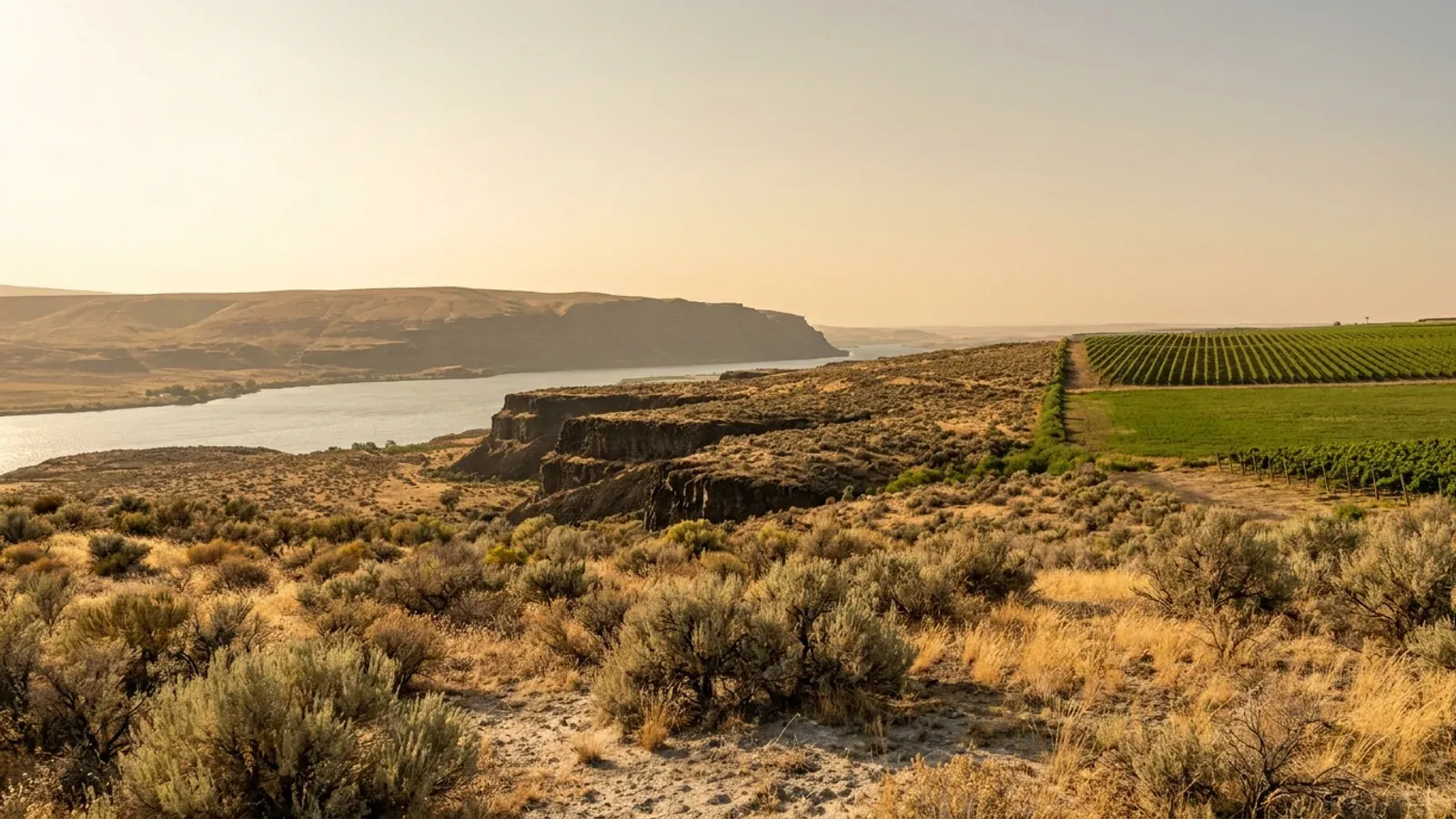
Barndominium Builders in Pasco, Washington
Pasco is growing fast, and most new homes here go into subdivisions of standard lots, so the first question for a barndominium is which zone the parcel carries. The City's zoning tables cap how large a detached garage or shop may be in each residential zone, while its largest-lot zone, Residential Transition, asks for lots of roughly two and three-quarter acres. That makes a combined house and shop under one roof the practical design on many Pasco parcels. Inside the limits, the City's Building Division permits the house, City sewer and Columbia River water serve the lot, and many neighborhoods also have City-supplied irrigation. Land outside Pasco falls to Franklin County, and Kennewick and Richland across the river run their own offices. We take a project from a custom plan through site preparation, permitting and a turnkey build, or supply barndominium kits and pole barn homes for owners who want to assemble the shell themselves. Send the parcel through the survey and we will check the zone's shop limits, the utility connections and any water-rights question before a plan is drawn.
Pasco at a glance
- Principal county
- Franklin County
- Building permit
- City building department
- Land use
- City zoning, inside an urban growth area
- Wastewater
- Public sewer
- Water
- Public water system
Barndominium Builders Near Pasco
From a turnkey build to a shell you finish yourself, the work starts with the parcel: the access, the building pad, the route to sewer or septic, and the water source. The parcel decides the budget more than the floor area does, so each option is priced against your land rather than a rate card.
Turnkey Builds
Turnkey barndominiums in Washington State: one team from land and permits to the finished, inspected house, with water, septic and energy code planned in.
Custom Plans
Custom barndominium plans for Washington State: floor plans and permit drawings with the energy code credits and your site's design values built in.
Site Preparation
Barndominium site preparation in Washington State: clearing, grading, drainage and pads, planned around the well, septic area, wetlands and the climate.
Permitting
Barndominium permits in Washington State: city or county building permit, water supply evidence, septic permit, energy code credits and rural zoning.
Barndominium Kits and Pole Barn Homes in Pasco
A kit suits an owner who wants to raise the shell with their own crew. A pole barn home sets its frame on posts and trusses (the engineering term is post-frame construction) and suits a wide, simple layout with a shop bay under the same roof; a metal building home uses a bolted steel frame. Which one fits your parcel comes down to the zoning, the site and the design values the local building office publishes, covered below.
Barndominium Kits
Barndominium kits and shell kits for Washington State land: frame, panels and drawings, sized to the design values your city or county sets for the site.
Pole Barn Homes
Pole barn homes and pole barn house kits for Washington State: post-frame buildings with a shop and living space, designed to your county's snow load.
Metal Homes
Metal building homes in Washington State: steel-clad houses finished to the state energy code, with the insulation and condensation details done right.
Building a Barndominium in Pasco: Permits, Zoning, Septic and Water
On rural land the zoning, septic and water answers often come before the building answer. Here is who decides each part in Pasco, taken from the office or document that publishes it. Rules change, so check them again against your parcel before anything is drawn.
City of Pasco Building Division
Pasco's Building Division monitors and inspects construction and development within the City of Pasco. The City says permits are required on most construction projects, and residential permits have a five-to-seven business day review, against 20 to 30 business days for commercial work. Parcels outside the city limits are permitted by Franklin County.
Source: Building Division, City of Pasco (pasco-wa.gov)
City of Pasco Planning Division
Pasco's Planning Division applies Title 25 of the municipal code and the City's 2018 to 2038 Comprehensive Plan, which expects Pasco to be home to over 120,000 people by 2038. The division publishes a quick zoning reference for placing a house, detached garage, shop or shed on a residential lot, and zoning by address is available through the City's parcel lookup.
Source: Planning Division, City of Pasco (pasco-wa.gov)
City of Pasco Public Works Wastewater; Benton-Franklin Health District off the sewer
Pasco's wastewater plant treats sewage from the City's collection system, disinfects it with ultraviolet light and returns it to the Columbia River. City lots connect to that system. A parcel with no sewer needs an on-site septic permit from the Benton-Franklin Health District, which serves Franklin County.
Source: Wastewater Treatment, City of Pasco (pasco-wa.gov)
City of Pasco Public Works Water Filtration
Pasco pumps raw water from the Columbia River to its treatment plant, where the Water Filtration team adjusts treatment and monitors chlorine before it reaches customers. The City also runs a separate irrigation water system for landscaping, usually from April to October. Land outside the City system relies on a private well and has to show an adequate water supply before a permit is issued.
Source: Drinking Water Treatment, City of Pasco (pasco-wa.gov)
- Shop size limits by zone
- Pasco's Quick Zoning Reference Table caps detached garages and shops at 1,000 square feet in the standard single-family district (1,200 on lots over 12,000 square feet), 1,200 in RS-12 and 1,600 in RS-20, where each additional 20,000 square feet of lot adds 400 more. The Residential Transition (RT) zone requires 120,000 square foot lots and 50-foot setbacks.
- Water rights for new development
- The City holds rights to about 18,883 acre-feet of water a year for municipal drinking water and used about 15,873 acre-feet in 2022. To keep pace with growth, new developments either transfer existing water rights to the City or pay a water-rights fee per acre-foot; existing customers' bills are unchanged.
Source: Quick Zoning Reference Table, City of Pasco Planning Division (pasco-wa.gov)
Source: Water Rights, City of Pasco (pasco-wa.gov)
Building on land near Pasco
Match the building to the zone before you buy. On a standard single-family lot a detached shop tops out around 1,000 square feet, so a larger bay usually has to be part of the house itself, while RS-20 and Residential Transition parcels leave room for a separate pole barn or metal building. Ask whether the lot already has City-supplied irrigation, and whether any water rights come with a larger parcel, since new development in Pasco either brings rights or pays for them. Parcels on the edge of town may still be unincorporated. For rural acreage with a well and septic, see our Franklin County page.
Other places in this part of Washington
Tri-Cities & Walla Walla
Have land in or near Pasco? Tell us about the parcel and what you want on it, and we will check it against the local rules before anything is drawn.
Building in Pasco: questions
Start the surveyHow much does it cost to build a barndominium in Pasco?
Do I need a building permit for a barndominium in Pasco?
How big can a shop be on a Pasco residential lot?
Keep reading
What usually comes next once you know what Pasco allows.
Barndominium Cost Guide
Sourced per-square-foot ranges by tier and size, and what moves the number on your land.
Read itIs a Barndominium Legal in Washington?
Zoning, rural land, septic, water and who inspects, before you buy the land.
Read itHow Long Does It Take?
From parcel to move-in, and which steps set the clock.
Read itSources for this page
The published pages behind the Pasco facts above. Rules change, so check the current version with the office before you rely on it.
- Building Division, City of PascoBuilding permit authoritypasco-wa.gov
- Planning Division, City of PascoLand use and zoningpasco-wa.gov
- Wastewater Treatment, City of PascoSewer or septicpasco-wa.gov
- Drinking Water Treatment, City of PascoWater supplypasco-wa.gov
- Quick Zoning Reference Table, City of Pasco Planning DivisionShop size limits by zonepasco-wa.gov
- Water Rights, City of PascoWater rights for new developmentpasco-wa.gov
Other places near Pasco
Nearby places with their own pages. Across a city limit or a county line the permit office, the zoning, the septic program and the water rules can change, so each is covered separately.
Building in Pasco?
Start with the survey. Tell us where the land is and what you want on it, and we will come back with which offices decide it, what the zoning allows, and a plan to fit.